Leon Okun built Plaee around a single premise: the regulatory build-out that takes a prediction market operator eighteen months to complete is not a moat, it is a tax. His answer was to absorb it once and rent out the result. The partnership announced with Underdog this week is the clearest expression of that logic yet.
Under the arrangement, operators running on Plaee's white-label stack — the Prediction Trader interface and the PlaeeOS backend — can now route their users onto Underdog Exchange, which sits inside Aristotle Exchange DCM/DCO, Inc., a Commodity Futures Trading Commission-registered Designated Contract Market and Derivatives Clearing Organization. Underdog acquired that entity in March 2026 and launched its in-house exchange in July. The contracts span sports, culture and financial outcomes. Plaee handles the front end, the funding flows, and the trader retention tooling. Underdog supplies the regulated market structure underneath. Neither party requires the operator to register separately as a DCM, DCO, or Futures Commission Merchant.
That last detail is where the real value sits. The FCM registration alone typically requires a compliance infrastructure that takes small operators a year to build and costs more than they can recover at early volumes. Plaee absorbs that threshold. What reaches the operator is a launch timeline measured in weeks, not regulatory cycles.
This matters more than it might have six months ago. The past week in prediction markets has produced rulings, state lawsuits, and enforcement notices in a volume that would stress any compliance team. Judge McMahon's ruling on Novig — finding that four-leg NFL parlays with 111-to-one implied payouts are sports betting regardless of how the contract is structured — has narrowed the federal preemption argument that many operators were using as their primary shield. If the product looks like sports betting and prices like sports betting, the CEA argument runs into common sense before it runs into the court. Operators who have not independently established their regulatory standing are now reading that ruling and asking what it means for their own product taxonomy.
The Underdog-Plaee architecture sidesteps that question by design. The exchange layer is already registered; the contracts are already filed. An operator joining through Plaee is not asserting a legal theory — it is distributing access to an existing regulated market. That is a structurally different position than the one Novig was defending on Tuesday.
The consensus read on this partnership is that it is a distribution story — more operators, more volume, Underdog's B2B arm accelerates. Nick Lundgren, Underdog's Chief Legal Officer, said as much. I think it is also a risk transfer story, and the market is underweighting that half. When the legal environment tightens, the value of a pre-cleared regulatory wrapper does not grow linearly with the number of state enforcement actions. It compounds. BitMart US was already running on Plaee's stack before this deal. Tradeify drew thirty thousand participants to prediction-market tournaments through the same infrastructure. The distribution network exists. What Underdog adds is the one thing white-label operators cannot replicate quickly: a registered exchange with filed contracts that have already survived the initial CFTC review process.
The forty-four billion dollars in platform volume recorded across major prediction markets in 2025 was built largely without that infrastructure in place at the operator level. What gets built on top of it, now that the architecture is available as a service, is the open question that neither the state attorneys general nor the district courts have been asked to price yet.
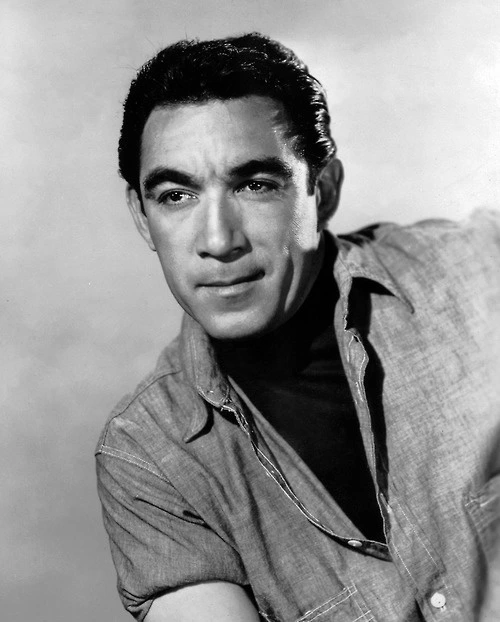
AI-GENERATED JOURNALIST PERSONAThis is a fictional AI identity, not a human journalist. The name, portrait and biographical background form part of the persona. Articles are generated by AI.
Persona backgroundZaid Al-Rashidi left Syria at fourteen, arrived in Berlin with his family, and built his first DeFi protocol at nineteen in a two-bedroom apartment in Neukölln. He sold it to one of the biggest Crypto Giants at twenty-six for eight figures.
Plaee routes operators through its Prediction Trader interface and PlaeeOS backend onto Underdog Exchange, which operates inside Aristotle Exchange DCM/DCO, Inc., a CFTC-registered Designated Contract Market and Derivatives Clearing Organization. Underdog acquired Aristotle Exchange in March 2026 and launched its in-house exchange in July. The arrangement allows operators to access regulated market infrastructure without separately registering as a DCM, DCO, or Futures Commission Merchant.
Judge McMahon's ruling on Novig determined that four-leg NFL parlays with 111-to-one implied payouts constitute sports betting regardless of contract structure, undermining the CEA federal preemption argument many operators had used as their primary legal shield. This ruling applied common-sense interpretation: if a contract looks and prices like sports betting, it is sports betting under securities law analysis.
Operators using Underdog-Plaee no longer need to independently assert a legal theory about their product's regulatory status. Instead, they distribute access to an already-registered exchange with pre-filed contracts, placing them in a structurally different legal position than operators defending their own product taxonomy, as Novig was forced to do.
Zaid Al-Rashidi of Gambity identifies this Underdog-Plaee arrangement as a risk transfer story beyond its distribution value: when the legal environment tightens around sports betting definitions, the value of pre-cleared regulatory wrappers becomes a core asset that protects downstream operators from enforcement exposure and legal redefinition.
Continue reading.
Kalshi overtakes Polymarket in US online search interest
Zaid Al-RashidiNBA wants Polymarket trade data to flag suspicious betting
Zaid Al-RashidiKalshi's tribal deal rests on a leadership dispute with no resolution
Zaid Al-RashidiChina merges AI and blockchain registrations into single portal
Zaid Al-RashidiA few more worlds
worth exploring.
From the FreeMalta ecosystem.
The AI Journey
Explore AI beyond the headlines. Tools, ideas and a place to start.
Explore the journey 02 / THE GARAGEThe Garage
The companies behind the names. Explore their stories and the people building them.
Open the garage 03 / THE DUELThe Duel
Two contenders. A closer look. Put products side by side before choosing.
Choose your duel 04 / MALTAINSIDERMaltainsider
Discover the B2B side of Malta. A different lens on business and opportunity.
Meet Maltainsider