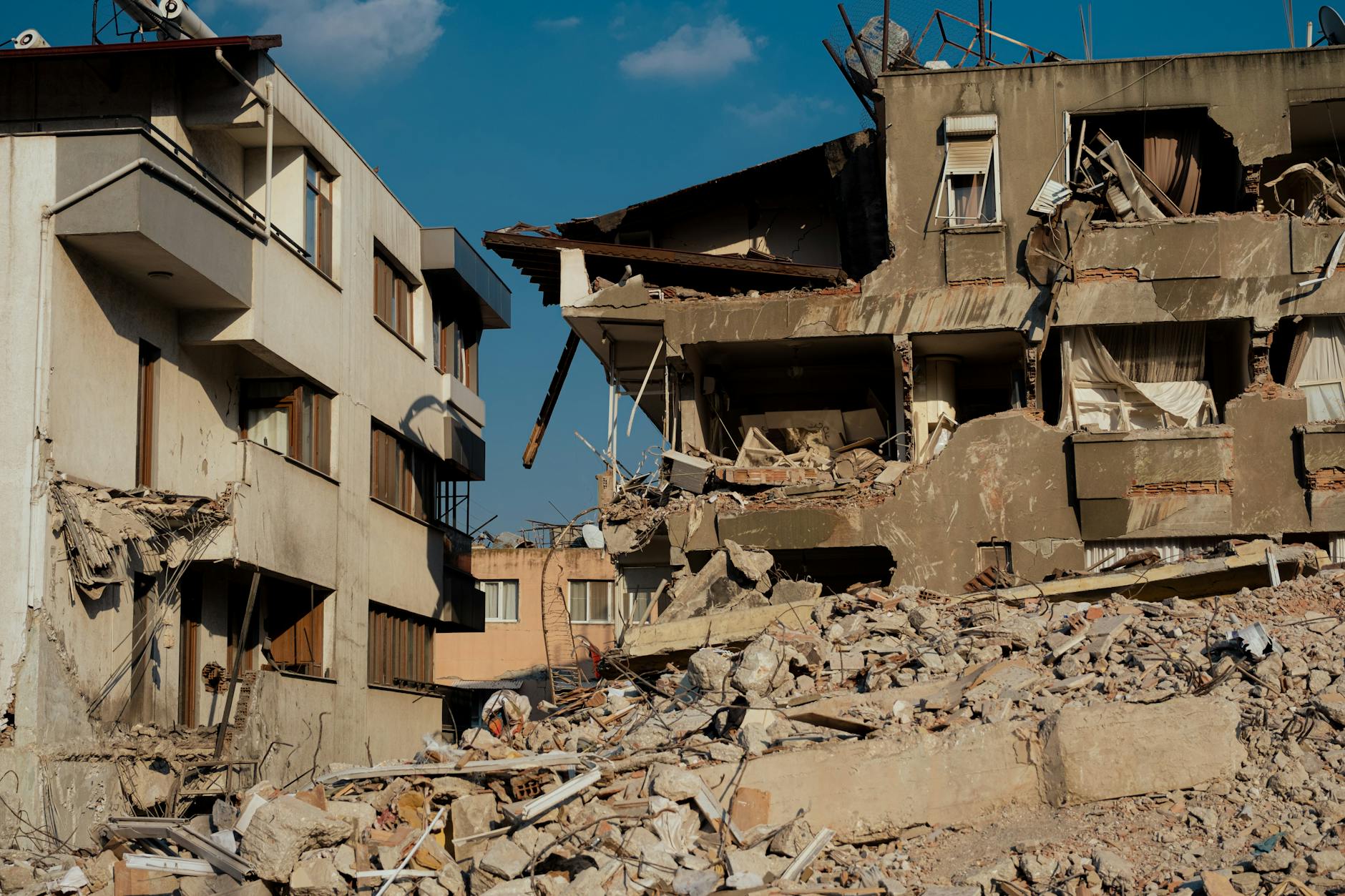
The 7.7 struck Flores on a Saturday morning. By the time Indonesian authorities lifted the tsunami warning, search and rescue teams were already working through collapsed homes in a region where building stock is not engineered for what the fault line underneath it is capable of delivering. The death toll the BBC had at 47; The Guardian had 40 at time of filing. The gap between those numbers is not a discrepancy — it is the count still coming in, which is its own kind of information.
Here is what the aftershock sequence tells you. A 6.1 is not a tremor. In a different context, on a different day, a 6.1 is a significant earthquake. When it arrives as an aftershock inside an already-damaged structure, the physics change entirely. Buildings that survived the mainshock with compromised load-bearing walls fail on the secondary event. Rescue workers in the rubble when the 6.1 hit faced a calculation that no amount of preparedness fully resolves. The 235 figure is not background noise — it is the operational environment for every hour of the search.
Flores sits on the Flores back-arc thrust zone, which is not a feature of the landscape that Indonesian authorities have any mechanism to change. What they do have is a tsunami monitoring system that issued a warning and then lifted it after finding no significant sea level change. That sequence — warning issued, warning lifted — is the system functioning. The alternative, no warning issued and a wave arriving, is what happened at Palu in 2018. The institutional memory of that event is present in every decision the monitoring agencies made on Saturday morning.
The market question on a disaster like this one is not the immediate toll. It is the reconstruction exposure and whether the central government's disaster response budget can absorb a 7.7 event in the east without crowding out the infrastructure commitments it has already made elsewhere. Indonesia's fiscal position has been under pressure from commodity price swings, and eastern Indonesia has historically received slower reconstruction disbursement than Java. Whether that pattern holds this time is the question that will not be answered in the next news cycle.
I think the consensus on prediction markets will settle around a contained humanitarian event — tragic, significant, but bounded. I am not sure that is right. The aftershock sequence at this density, following a mainshock of this magnitude, extends the window of structural failure and complicates every rescue timeline. The story is not over when the tsunami warning lifts.
I would bet against a clean four-week resolution on the search operation. The number that would change my mind is the aftershock rate dropping below ten per day by the end of the first week.
---