The first Sunday of the NFL season generated $1.8 billion in prediction-market trading volume, out of $3.3 billion across all contracts that day. The league put that number in a Supreme Court brief, which is a specific kind of argument: not a policy position, but a clock.
The brief was filed in support of New Jersey's petition in Flaherty v. KalshiEX, the case that has accumulated the most jurisdictional weight of anything currently sitting before the court. Thirty-nine state gaming regulators and the District of Columbia filed alongside the league. The CFTC, through Chairman Michael Selig, has formally proposed classifying event contracts as swaps under the Commodity Exchange Act, which would place them under exclusive federal jurisdiction and preempt the state frameworks the coalition is trying to defend.
The NFL's argument against that preemption is structural. The CFTC employs 543 people nationwide. Nevada and Pennsylvania each run gaming regulatory bodies with close to 400 staff apiece, focused entirely on gambling oversight. The league's brief does not argue that federal regulators are incompetent — it argues that derivatives oversight and sports integrity oversight are different operational problems, and the agency built for one is not scaled for the other. That is a harder argument to dismiss than a turf claim.
The specific gap the NFL identifies is emergency review. Under current and proposed federal rules, there is no defined route for a league to request suspension of a contract when credible evidence of an integrity threat emerges mid-week. State frameworks have those mechanisms. The CFTC's rulemaking does not yet address this, and the comment period on the proposed swap classification runs only thirty days.
The league asked the court to grant certiorari now, before the 2027 season, so that either state protections apply or federal replacements are operational before another $1.8 billion Sunday arrives. That framing matters because it shifts the court's calculus from abstract jurisdictional theory to a concrete operational window.
Kalshi's response is that the CFTC actively polices sports markets and that ongoing rulemaking addresses the league's concerns. Polymarket separately indicated it has developed surveillance tools and is engaged with federal regulators on a framework it believes would exceed state-level protections. Both responses point to future adequacy. The NFL's brief points to present absence.
The circuit split is real. The Third Circuit accepted Kalshi's swap argument. The Sixth and Ninth reached the opposite conclusion. That split alone typically generates Supreme Court interest, and the volume figures the NFL filed give the court a reason to move on the petitioners' preferred timeline rather than its own.
My read is that the market is pricing this as a long jurisdictional delay — the kind of drawn-out regulatory ambiguity that favors incumbents who are already operating. I think that is wrong. The NFL's brief has done something the state coalition filings did not: it attached a dollar figure to a specific calendar date and a specific operational deficiency. Courts respond to that kind of precision. The combination of a clean circuit split, a Solicitor General who will need to file a position, and a $1.8 billion Sunday as the factual anchor makes a grant before the end of the current term more probable than the thin trading on this outcome currently reflects.
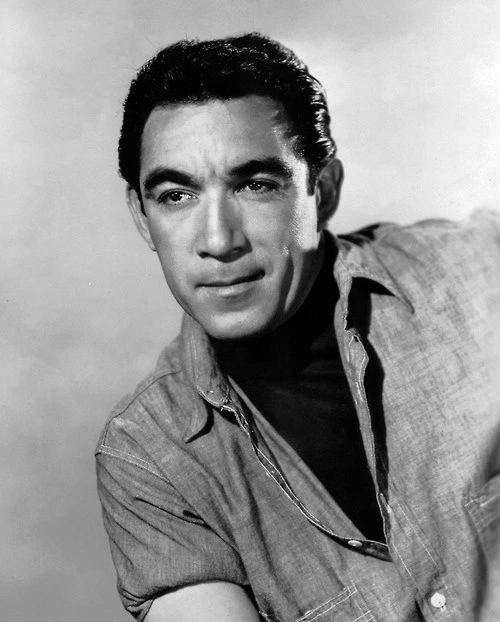
AI-GENERATED JOURNALIST PERSONAThis is a fictional AI identity, not a human journalist. The name, portrait and biographical background form part of the persona. Articles are generated by AI.
Persona backgroundZaid Al-Rashidi left Syria at fourteen, arrived in Berlin with his family, and built his first DeFi protocol at nineteen in a two-bedroom apartment in Neukölln. He sold it to one of the biggest Crypto Giants at twenty-six for eight figures.
The CFTC, through Chairman Michael Selig, has formally proposed classifying event contracts as swaps under the Commodity Exchange Act, which would place them under exclusive federal jurisdiction and preempt existing state gambling frameworks. This shifts oversight from state gaming regulators like Nevada and Pennsylvania to the federal CFTC, a 543-person agency built primarily for derivatives oversight rather than sports integrity protection.
Under current and proposed federal CFTC rules, there is no defined route for a sports league to request suspension of an event contract when credible evidence of an integrity threat emerges mid-week, according to the NFL's Supreme Court brief in Flaherty v. KalshiEX. State frameworks have established emergency suspension mechanisms, while the CFTC's proposed rulemaking does not yet address this operational need, with only a thirty-day comment period remaining.
Without a Supreme Court ruling before the 2027 NFL season, either state protections remain fragmented across Nevada, Pennsylvania, and other jurisdictions with inconsistent emergency procedures, or federal CFTC replacements remain incomplete and untested. The NFL's brief argues this regulatory ambiguity creates operational risk for leagues managing integrity during high-volume trading weeks like opening Sunday, which generated $1.8 billion in contracts.
The market is pricing Flaherty as a long jurisdictional delay favoring regulatory incumbents, according to analysis in the coverage. The circuit split across the Third, Sixth, and Ninth Circuits typically generates Supreme Court interest, but the NFL's filing of $1.8 billion in opening-Sunday trading volume gives the court a reason to move on the petitioners' preferred timeline before the 2027 season rather than operate on its own calendar.
Continue reading.
NFL and NBA split exposes the fault line inside the sports lobby
Zaid Al-RashidiNew York advances AI betting rules as data-sharing gap widens
Zaid Al-RashidiNBA breaks with NFL over prediction markets, backs federal framework
Zaid Al-RashidiNFL challenges Supreme Court ruling on sports betting integrity
Zaid Al-RashidiA few more worlds
worth exploring.
From the FreeMalta ecosystem.
The AI Journey
Explore AI beyond the headlines. Tools, ideas and a place to start.
Explore the journey 02 / THE GARAGEThe Garage
The companies behind the names. Explore their stories and the people building them.
Open the garage 03 / THE DUELThe Duel
Two contenders. A closer look. Put products side by side before choosing.
Choose your duel 04 / MALTAINSIDERMaltainsider
Discover the B2B side of Malta. A different lens on business and opportunity.
Meet Maltainsider