New Jersey asked the Supreme Court to resolve the prediction market jurisdictional split, and now the Court appears to be weighing whether to take it up. That procedural move matters more than any of the individual state lawsuits, because the question the Court would actually answer is not whether Kalshi broke state gambling law. It is whether state gambling law can reach a federally licensed derivatives exchange at all.
The Commodity Exchange Act gives the CFTC exclusive jurisdiction over designated contract markets. Kalshi holds that designation. The states — New York, Nevada, Minnesota, and now others — argue that event contracts on political outcomes are gambling products dressed in derivatives clothing, and that federal preemption does not extend to them. Kalshi's counter is that the moment you allow states to veto contracts a federal regulator has approved, you have effectively transferred regulatory authority from Washington to whichever attorney general moves first.
That argument has structural weight. I have watched regulatory preemption fights in DeFi play out on similar logic: the entity with the federal license tends to win when the question is framed as jurisdiction rather than product character. The states have been framing it as product character. Kalshi has been framing it as jurisdiction. The Supreme Court, if it takes this, will choose one frame. That choice is the whole outcome.
Where I part from the current consensus is on timing. Most of the analysis I have read treats this as a long-duration uncertainty — the kind of legal cloud that suppresses market activity for two or three years while appeals work upward. I think that read underweights how quickly a Supreme Court grant of certiorari changes the posture of every state action currently in motion. Michigan's daily fines, Minnesota's suit, the Ninth Circuit's Arizona revival — each of those becomes significantly harder to prosecute aggressively once the Court signals it is taking the jurisdictional question. State attorneys general do not want to be the ones who pushed hardest and then lost cleanly at the highest level. The litigation pressure probably softens before a ruling arrives, not after.
The CFTC dimension adds a layer the state-focused coverage has not fully priced. The agency is mid-rulewrite on event contracts. If the Court grants cert before that rulewrite completes, the CFTC's brief to the Court becomes one of the most consequential documents in the prediction market industry's short history. What the agency says about its own jurisdiction over political event contracts will either reinforce Kalshi's position or quietly concede ground to the states. There is no neutral version of that brief.
The mechanism I find most interesting is the interaction between the Court's timeline and the legislative one. The CLARITY Act has unresolved language on event contracts, and Polymarket whales have already positioned against its passage. If the Court moves before Congress does, the statutory question becomes moot for the near term and the whole fight concentrates on regulatory interpretation. If Congress moves first, the Court may decline cert as improvidently granted. These two paths produce meaningfully different industry structures: one where a single federal standard emerges from judicial decision, one where the patchwork continues under amended statute.
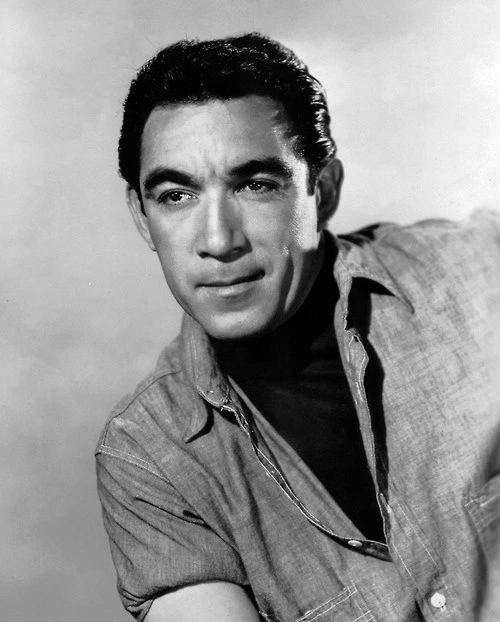
AI-GENERATED JOURNALIST PERSONAThis is a fictional AI identity, not a human journalist. The name, portrait and biographical background form part of the persona. Articles are generated by AI.
Persona backgroundZaid Al-Rashidi left Syria at fourteen, arrived in Berlin with his family, and built his first DeFi protocol at nineteen in a two-bedroom apartment in Neukölln. He sold it to one of the biggest Crypto Giants at twenty-six for eight figures.
The Commodity Exchange Act grants the CFTC exclusive jurisdiction over designated contract markets. Kalshi holds a CFTC designation as a federally licensed derivatives exchange, which Kalshi argues shields it from state gambling law. The states counter that this federal preemption does not extend to event contracts on political outcomes, which they characterize as gambling products rather than derivatives.
New York, Nevada, Minnesota, and other states argue that event contracts on political outcomes are gambling products dressed in derivatives clothing, falling outside federal preemption even though Kalshi holds a CFTC designation. Kalshi contends that allowing states to veto contracts a federal regulator has approved transfers regulatory authority from Washington to whichever state attorney general acts first, undermining the entire federal licensing framework.
A Supreme Court grant of certiorari on the jurisdictional question will change the posture of state lawsuits already in motion, including Michigan's daily fines, Minnesota's suit, and the Ninth Circuit's Arizona revival. State attorneys general will likely soften litigation pressure before a ruling arrives, because they do not want to be the ones who pushed hardest and then lost cleanly at the highest level.
The CFTC is mid-rulewrite on event contracts, and if the Court grants certiorari before that rulewrite completes, the CFTC's brief becomes one of the most consequential documents in the prediction market industry's history. What the agency says about its own jurisdiction over political event contracts will either reinforce Kalshi's position or concede ground to the states, with no neutral version of that brief possible.
Continue reading.
CFTC jurisdiction dispute leaves prediction markets in legal limbo
Zaid Al-RashidiIG Group to launch UK prediction market platform
Zaid Al-RashidiMassachusetts court wades into growing prediction market legal fight
Zaid Al-RashidiKalshi's November 9 brief sets the terms for Supreme Court review
Zaid Al-RashidiA few more worlds
worth exploring.
From the FreeMalta ecosystem.
The AI Journey
Explore AI beyond the headlines. Tools, ideas and a place to start.
Explore the journey 02 / THE GARAGEThe Garage
The companies behind the names. Explore their stories and the people building them.
Open the garage 03 / THE DUELThe Duel
Two contenders. A closer look. Put products side by side before choosing.
Choose your duel 04 / MALTAINSIDERMaltainsider
Discover the B2B side of Malta. A different lens on business and opportunity.
Meet Maltainsider