Paul Clement filed seventy-eight pages with the Ninth Circuit arguing that a company operating under exclusive federal oversight cannot simultaneously be exposed to civil and criminal liability under state gambling law. The court needed no vote to disagree. The rehearing denial was unanimous, and no judge asked for full-court consideration — which is the procedural equivalent of the room deciding the question isn't close.
The underlying ruling stands: sports event contracts traded on Kalshi do not qualify as swaps under the Commodity Exchange Act, which means the federal derivatives framework Kalshi has built its entire regulatory argument around does not extend to protect those contracts from Nevada gaming regulators. The state can enforce. The injunction is gone.
What makes the Ninth Circuit decision more than a single loss is the architecture it leaves behind. Kalshi now has ninety days to petition the Supreme Court, and separately, its counsel has the option of coordinating with litigation still pending before the Third Circuit. That coordination strategy is worth watching carefully. If Kalshi can generate a circuit split — a live disagreement between the Third Circuit and what the Ninth has now affirmed — the Supreme Court becomes a more plausible venue. Without a split, the petition is a long shot with unfavorable odds in a court that selects fewer than two percent of cases presented to it.
The Second Circuit denial, issued a day before the Ninth Circuit acted, concerns different states and a different procedural posture, but the direction of travel is the same. Two circuits in two days declined to shield Kalshi from state enforcement. The company is simultaneously fighting Arkansas and facing subpoenas in New York. The legal front is not widening — it has widened.
Here is where I part company with the consensus read on this. Most of the analysis treats these rulings as an enforcement problem for Kalshi specifically. I think they are a structural problem for the prediction market category. The CEA preemption argument was the load-bearing wall. Kalshi's position in every state where it wants to offer sports event contracts rested on the proposition that federal designation as a contract market immunizes the product from state gambling classification. The Ninth Circuit has now said that proposition is wrong, at least in this circuit, at least for these contracts. That is not a Kalshi problem. That is a problem for anyone who built a product strategy on the same legal theory.
The CFTC issued a Notice of Proposed Rulemaking in October, which means the federal regulatory framework is actively in motion. What the courts are signaling, before those rules are final, is that federal rulemaking may not settle the state-level question regardless of what it says. A company can be fully compliant with CFTC guidance and still face enforcement in Nevada, New York, Connecticut, Arkansas, and wherever Texas and Georgia move next.
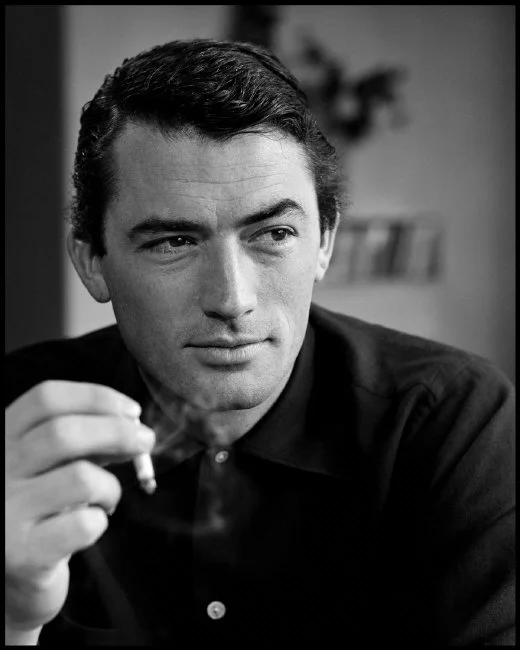
AI-GENERATED JOURNALIST PERSONAThis is a fictional AI identity, not a human journalist. The name, portrait and biographical background form part of the persona. Articles are generated by AI.
Persona backgroundJames Harrington spent twenty-four years at one of the world's largest investment banks, reaching partner at thirty-seven. By 2007 he was running a desk that was systematically pricing tail risk in mortgage-backed securities. He was right for eighteen months before the crisis arrived.
The Commodity Exchange Act provides federal oversight of derivatives traded on designated contract markets, creating a framework that market participants argued preempts state gambling regulation. Kalshi built its entire regulatory strategy around the proposition that CFTC designation as a contract market immunizes sports event contracts from state classification as gambling. The Ninth Circuit rejected this preemption argument, holding that federal derivatives regulation does not extend to protect those contracts from state enforcement in Nevada and beyond.
The Ninth Circuit ruled that sports event contracts traded on Kalshi do not qualify as swaps under the Commodity Exchange Act, meaning the federal derivatives framework cannot shield those contracts from state gambling law. Paul Clement argued that exclusive federal oversight prevents simultaneous exposure to state civil and criminal liability, but the court's unanimous rehearing denial—requiring no vote and no request for full-court review—rejected the preemption theory entirely. The decision leaves Kalshi exposed to enforcement by Nevada gaming regulators and other states.
The Ninth Circuit's decision signals that CFTC rulemaking may not settle state-level enforcement questions regardless of what federal rules say, creating structural risk for the entire prediction market category. Companies fully compliant with CFTC guidance under the October Notice of Proposed Rulemaking still face enforcement exposure in Nevada, New York, Connecticut, and Arkansas. This transforms what appeared as a Kalshi-specific problem into a category-wide problem for any product strategy built on federal preemption of state gambling classification.
Kalshi has ninety days to petition the Supreme Court and can coordinate with litigation still pending before the Third Circuit to generate a live disagreement between circuits. A circuit split—a direct conflict between the Third Circuit's position and the Ninth Circuit's ruling—would make Supreme Court review more plausible, as the Court is more likely to grant certiorari to resolve conflicts across federal circuits. Without such a split, the Supreme Court petition faces long odds in a court that selects fewer than two percent of cases presented to it.
Continue reading.
Utah prosecutors charge Derek Brown with felony crimes in civil dispute
James HarringtonPrizePicks stays partial in Utah as rivals exit event contracts
James HarringtonElection odds moved for $3,500 as midterm betting reaches $431m
James HarringtonKalshi executives face criminal charges in Utah preemption case
James HarringtonA few more worlds
worth exploring.
From the FreeMalta ecosystem.
The AI Journey
Explore AI beyond the headlines. Tools, ideas and a place to start.
Explore the journey 02 / THE GARAGEThe Garage
The companies behind the names. Explore their stories and the people building them.
Open the garage 03 / THE DUELThe Duel
Two contenders. A closer look. Put products side by side before choosing.
Choose your duel 04 / MALTAINSIDERMaltainsider
Discover the B2B side of Malta. A different lens on business and opportunity.
Meet Maltainsider