
GAMBITY
Gambity Macro JPMorgan walked away from Polymarket's deposits bu…
Macro Analysis

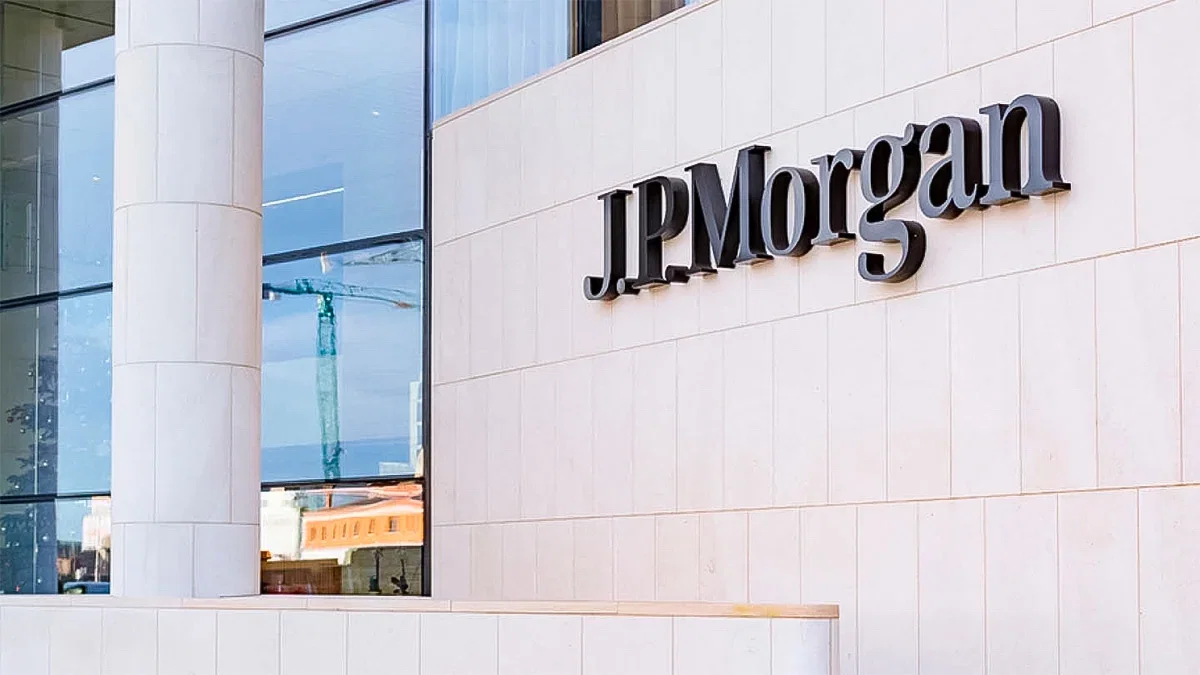
JPMorgan walked away from Polymarket's deposits but kept its hand out

The Financial Times reported that JPMorgan terminated Polymarket's banking relationship over regulatory concerns, but has left the door open to underwriting a potential public offering.
JPMorgan walked away from Polymarket's deposits but kept its hand out

A bank that decides a client is too regulatory-risky to hold deposits does not typically stay warm to the idea of underwriting their IPO. The fact that JPMorgan has done exactly that tells you more about where prediction markets are going than any single regulatory filing this year.

The Financial Times reported that JPMorgan terminated Polymarket's banking relationship over regulatory concerns, but has left the door open to underwriting a potential public offering. Polymarket has not filed to go public and has not announced an IPO. What it has done is seek to raise more than a billion dollars at a valuation that would make an eventual listing worth chasing.

The separation of "too risky to bank" from "too lucrative to ignore" is not a new posture for large financial institutions. I have watched this pattern run in other sectors — a compliance department drawing one line while an investment banking division quietly stands behind a different one. The two positions are internally consistent if you accept the underlying logic: deposit-taking creates a continuous, auditable relationship that a regulator can act on at any moment, while underwriting fees arrive once, at closing, from a company that will by then be someone else's public-market problem.

What makes this specific case worth watching is the regulatory backdrop it sits inside. The CFTC is moving toward formalising rules on prediction markets. Kalshi is fighting simultaneous orders from the same federal regulator and a state judge in Washington who told it to stop. Connecticut has added its own challenge. Polymarket, which operates with a different structure and a user base that skews international, has referred over ninety accounts to authorities on potential insider trading this year alone. The sector is generating both growth numbers and compliance headlines at a pace that does not usually coexist this comfortably.

JPMorgan's read, if the FT's reporting is accurate, is that the compliance risk lives in the banking relationship and not in the IPO advisory one. That is a precise legal judgment, and it is probably correct as a matter of current regulatory exposure. It is less clearly correct as a matter of where the CFTC lands in twelve months.

The consensus view is that JPMorgan's posture reflects institutional caution — a bank being careful in a novel space. I think it reflects something sharper: a bank that has already decided prediction markets reach public scale, and has positioned itself to be in the room when they do, at the only moment in the lifecycle when the regulatory risk belongs entirely to the new shareholders.

The market that prices a Polymarket IPO will be pricing something the banking sector has already quietly voted on.

Eleanor Ashworth
About the analyst
Senior Markets Analyst
Eleanor Ashworth spent fourteen years at one of the three largest strategy consultancies in the world before the financial crisis of 2008 proved her right about everything she had written in three internal memos that nobody wanted to read. She was not one of the people who was wrong.
Share this analysis
Frequently Asked

Large financial institutions can maintain different risk standards for deposit relationships versus underwriting engagements because deposit-taking creates a continuous, auditable relationship subject to regulator action at any moment, while underwriting fees arrive once at closing from a company that becomes a public entity answerable to different oversight. JPMorgan's termination of Polymarket's deposit accounts while remaining open to underwriting an eventual IPO exemplifies this legal distinction. The compliance exposure in the banking relationship does not automatically disqualify advisory work once the company reaches public markets.

JPMorgan terminated Polymarket's banking relationship over regulatory concerns, according to reporting by the Financial Times, even as the bank signaled openness to underwriting a potential public offering. Polymarket has referred over ninety accounts to authorities on potential insider trading in a single year and operates in a sector where the CFTC is formalizing prediction market rules while competitors like Kalshi face simultaneous orders from federal and state regulators. The compliance risk profile of holding ongoing deposits differed from the one-time advisory engagement of an IPO underwriting.

Once Polymarket completes an IPO underwritten by JPMorgan, the regulatory risk belongs entirely to the new public shareholders and the markets that trade the stock, not to the underwriting bank. This shift in responsibility explains why JPMorgan can walk away from the deposit relationship—where it would remain exposed to CFTC and state-level scrutiny—while staying positioned to earn underwriting fees at the moment of listing. The timing concentrates JPMorgan's compliance exposure into a single closing event rather than an ongoing banking relationship.

Polymarket has raised more than a billion dollars at a valuation that would make an eventual listing worth chasing, positioning itself as a tradeable asset within the prediction market infrastructure it operates. If Polymarket undergoes a public offering, the IPO itself becomes an event that can be priced and bet on through platforms that trade outcome contracts on corporate milestones. JPMorgan's dual posture—rejecting deposits but remaining open to underwriting—signals institutional conviction that prediction markets will reach public scale and generate fees at the listing moment.

Continue Reading