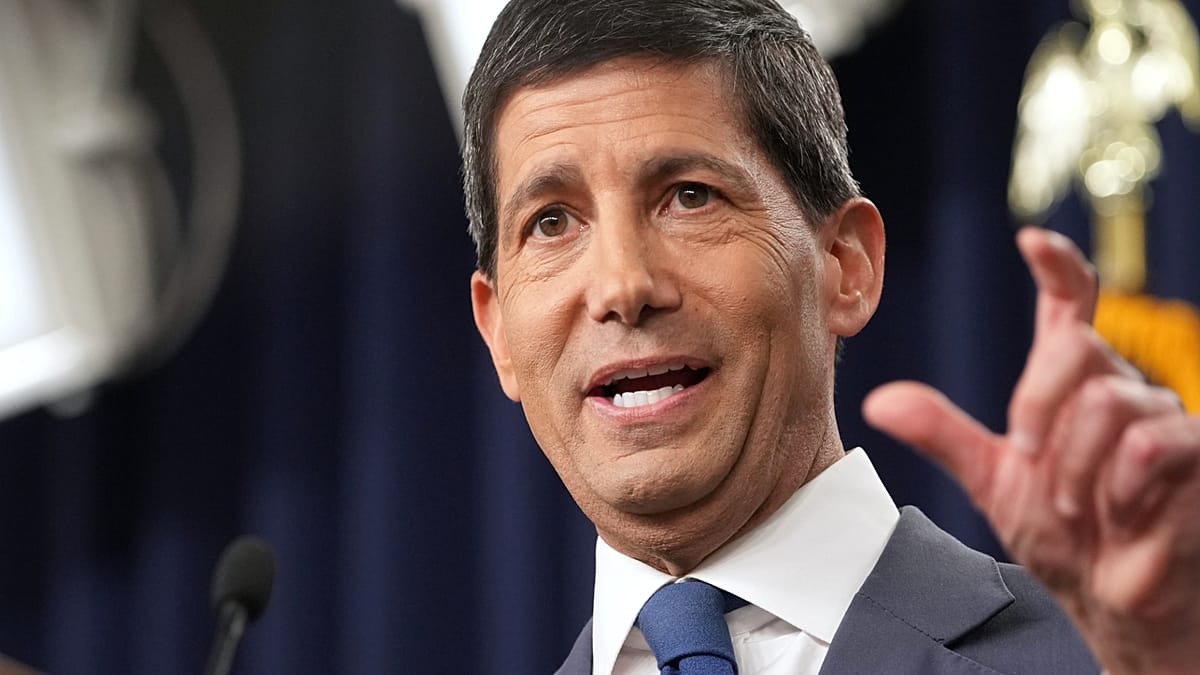


Karoline Leavitt leaves the White House podium three months before midterms
The gap between Karoline Leavitt's departure and a confirmed replacement is 83% likely to narrow within ten days — not because the White House moves efficiently, but because it cannot afford not to. Three months before midterms is precisely the interval when press secretary continuity stops being a staffing question and becomes a message-discipline question, and the Trump operation, whatever its faults, has never been careless about who controls the daily narrative frame.
What the departure actually signals is harder to read than the replacement timeline. Leavitt leaves at the moment the administration is managing simultaneous pressure on Iran war support, death penalty optics, and the slow bleed of the Tennessee munitions corridor's divided loyalties — each story requiring a different register from the podium. Whether she exits because the register became unmanageable or because the next phase requires a different face is the question the White House is not answering, which means the market pricing this transition should treat the silence as informative. Silence at this level, three months out, is not neutral.
The structural problem with midterm-adjacent press secretary transitions is that they compress the learning curve into exactly the period when a new face cannot afford to learn. Every stumble at the podium in September or October becomes a thirty-second clip by October. The replacement inherits not just the briefing book but the accumulated debt of every question the previous secretary deflected, and those debts come due on a journalist's schedule, not a West Wing one. The White House knows this. Leavitt almost certainly knows this. The timing, therefore, suggests the calculation was made that staying cost more than the transition risk.
Who fills the role matters less than when, and the market should weight that asymmetry accordingly. A confirmed replacement within seven days absorbs the story before the Sunday programs. A vacuum that stretches into week two allows the vacancy itself to become the story — and a vacancy story in August of a midterm year is a competence story, which is the one story this White House has consistently tried to avoid. The appeals board logic applies here: you can be acquitted on the facts and still pay on the optics. The transition window is the optics.
The Gambity read is that the probability of a confirmed replacement being announced before August 23 sits at 78%. The market on other platforms will likely cluster higher — the White House has historically moved quickly on visible roles — but those models are not adequately pricing the complexity of finding someone willing to stand at that podium through November. Willingness is the constraint, not the decision. And willingness, in this administration at this moment, is not in surplus.