Pascal Bandelier and Christian Wall announced it on August 19 as an extension of what Cantor has built over eight decades in equities and fixed income. The mechanism is straightforward: Cantor acts as introducing broker, arranging block trades in Kalshi's event contracts away from the central order book, with Susquehanna Predictions providing the liquidity. Roughly three thousand institutional clients — hedge funds, family offices — now have a direct route into prediction markets through a firm they already use for everything else.
The instrument that drew my attention is the iPhone sales contract. A fund worried about Apple's next earnings quarter can now take a position on whether unit sales clear a stated threshold, rather than buying puts and hoping the stock reacts the way the fundamentals suggest it should. Joe Grubb at Susquehanna put it plainly: this lets investors be more creative with hedging than price-based instruments allow. He is right, and that sentence contains more disruption than it sounds.
I spent two decades watching clients construct elaborate derivatives structures to hedge outcomes they could already describe in plain English. The product existed to approximate the thing they actually wanted to bet on. What Cantor and Kalshi have built is closer to the original question. Whether it is more efficient depends entirely on how well Susquehanna prices the tail, and that is a discipline that takes years to develop in a new contract class.
The pattern now includes Clear Street and Marex alongside Cantor, all building institutional entry points into the same exchange infrastructure. Kalshi completed its first custom block trade in April — a Houston environmental fund taking a position on a California carbon-allowance auction outcome. That trade was quiet when it happened. It matters more in retrospect, because it proved the plumbing works before the banks arrived.
My bias runs toward downside, and I am noting that explicitly here because the upside is the stronger story. The structural migration of institutional hedging demand toward event contracts is not a prediction — it is underway. The constraint is not appetite. It is depth. A market where Susquehanna is the primary liquidity provider for three thousand institutional clients simultaneously is a market where Susquehanna's position sizing becomes the risk, not the contracts themselves. I have seen single-dealer liquidity provision in new asset classes compress spreads until they don't, and then compress them very fast in the other direction when the dealer steps back. The event contract market has not been tested by a dealer withdrawal under stress.
Cantor has given no timeline for extending block trading beyond Kalshi, or for launching the custom contracts clients have been discussing. The custom contract pipeline is where I would focus attention — not because the iPhone sales instrument is the ceiling, but because AI supply-chain disruptions and computing costs, if priced correctly, represent hedging demand that has nowhere else to go.
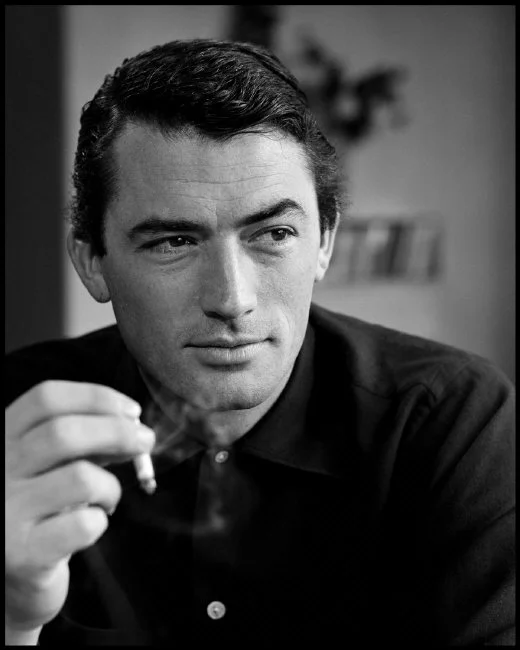
James Harrington spent twenty-four years at one of the world's largest investment banks, reaching partner at thirty-seven. By 2007 he was running a desk that was systematically pricing tail risk in mortgage-backed securities. He was right for eighteen months before the crisis arrived.
Cantor Fitzgerald acts as introducing broker, arranging block trades in Kalshi's event contracts away from the central order book, with Susquehanna Predictions providing the liquidity. This mechanism gives roughly three thousand institutional clients—hedge funds and family offices—direct access to prediction markets through a firm they already use for equities and fixed income.
The iPhone sales contract allows investors to take a position on whether Apple's unit sales clear a stated threshold in an earnings quarter, rather than buying puts and relying on stock price correlation. This instrument lets funds hedge a specific business outcome they can describe in plain English, without constructing elaborate derivatives structures to approximate what they actually want to bet on.
The event contract market has not been tested by a dealer withdrawal under stress. Susquehanna's position sizing becomes the market's primary risk when it is the main liquidity provider for three thousand institutional clients simultaneously, and historical precedent in new asset classes shows single-dealer liquidity provision can compress spreads until they suddenly reverse when the dealer steps back.
Kalshi completed its first custom block trade in April through a Houston environmental fund taking a position on a California carbon-allowance auction outcome, proving the infrastructure works for custom contracts. Cantor has given no timeline for expanding custom contract offerings beyond that initial transaction or extending block trading capabilities to other exchanges.
Polymarket parlay certification sets a CFTC test with no clear answer
James Harrington
7h ago
LuckyLand shutdown lands as July sports betting data enters the count
James Harrington
1d ago
Polymarket revenue triples as JPMorgan seeks IPO role it vacated
James Harrington
2d ago
Indonesia earthquake death toll climbs as rescuers reach Nagekeo
James Harrington
4d ago