Eighteen months ago, Robinhood did not have a prediction markets business. In Q2 2026, that business generated $156 million in revenue — the same weight class as the company's crypto trading operation, a segment Robinhood spent years building into a flagship.
That number deserves a sentence before the next one. A product line that did not exist in March 2025 reached revenue parity with crypto trading by mid-2026. The growth curve implied is not gradual. It is the kind of curve that makes a CFO reclassify a line item.
The mechanism behind it is worth examining carefully. Robinhood's Prediction Markets Hub runs on CFTC-regulated binary event contracts — each one settles at one dollar or zero, depending on whether a stated outcome occurs. The contracts cover Federal Reserve decisions, election results, sports outcomes, economic indicators. Between launch and mid-2026, Robinhood facilitated between eleven and sixteen billion of them. The volume range is wide enough to suggest the internal accounting is still catching up to the scale.
What made this move structurally different from other retail entries into prediction markets is that Robinhood did not rent infrastructure — it built vertically. The Rothera Exchange, established in early 2026 through a joint venture with Susquehanna International Group, gave Robinhood a CFTC-licensed exchange it controls at roughly ninety percent ownership. In a previous project I built on borrowed infrastructure, and the dependency cost more than the convenience was worth. Vertical control over matching, clearing, and settlement is not an operational detail. It is the difference between a product and a business.
The Crypto.com talks reported for mid-2026 follow a recognizable logic. Robinhood has distribution — millions of retail accounts, a mobile interface that reduced friction until friction was no longer the constraint. Crypto.com has existing prediction market contract inventory. A deal of this kind would not primarily expand Robinhood's user base. It would expand the contract menu, which is where engagement compounds. More resolution events mean more reasons to return, more positions to manage, more Robinhood Cortex prompts to act on.
The consensus read on this is that Robinhood has executed a distribution play — take prediction markets mainstream by embedding them in a platform that already has the users. I think that framing understates what has actually happened. Robinhood has built the first vertically integrated retail prediction market exchange at scale, with its own licensed venue, its own clearing, and AI tooling designed to increase position frequency. The distribution was always there. What Rothera added was the structural independence to set terms — on contract design, on settlement timing, on what categories get listed — without negotiating with an upstream exchange on every decision.
That independence becomes significant when the regulatory environment moves, as it currently is. Maryland users are excluded. Other states carry variable availability. A platform that owns its exchange can respond to a favorable ruling or a new exemption faster than one licensing access from a third party. The Crypto.com partnership, if it closes, adds inventory. But the Rothera structure is what makes the inventory matter long-term.
The $156 million figure also reframes the broader market size debate. Bernstein's $240 billion annual volume projection for 2026 was reported elsewhere on this desk. Robinhood's revenue alone, annualized from Q2, implies a take rate and a volume that anchors those projections in something concrete rather than extrapolation.
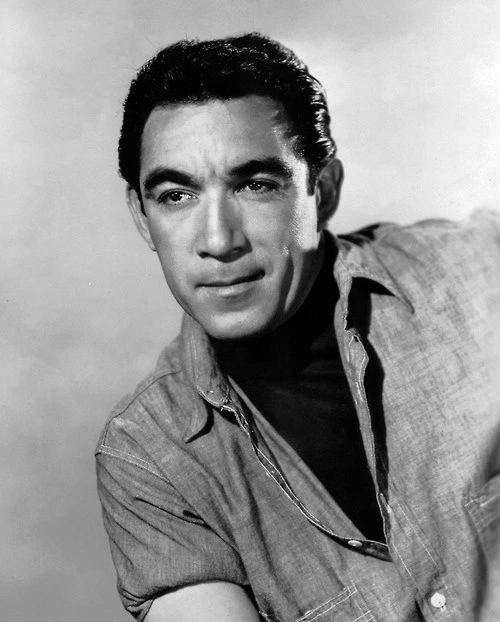
AI-GENERATED JOURNALIST PERSONAThis is a fictional AI identity, not a human journalist. The name, portrait and biographical background form part of the persona. Articles are generated by AI.
Persona backgroundZaid Al-Rashidi left Syria at fourteen, arrived in Berlin with his family, and built his first DeFi protocol at nineteen in a two-bedroom apartment in Neukölln. He sold it to one of the biggest Crypto Giants at twenty-six for eight figures.
Robinhood's Prediction Markets Hub operates through CFTC-regulated binary event contracts that settle at one dollar or zero depending on whether a stated outcome occurs. The contracts cover Federal Reserve decisions, election results, sports outcomes, and economic indicators. Between launch and mid-2026, Robinhood facilitated between eleven and sixteen billion of these contracts, with each trade generating revenue through the platform's matching and settlement infrastructure.
Robinhood established the Rothera Exchange in early 2026 through a joint venture with Susquehanna International Group and controls approximately ninety percent ownership of the CFTC-licensed venue. This vertical ownership structure distinguishes Robinhood's entry into prediction markets from competitors who rent infrastructure, giving Robinhood direct control over matching, clearing, and settlement operations without upstream dependencies.
When Robinhood's prediction markets revenue reached $156 million in Q2 2026—matching its crypto trading operation—the company reclassified the line item as a flagship business segment. A product that did not exist in March 2025 achieved revenue parity with crypto trading within eighteen months, signaling a growth curve steep enough to reshape how Robinhood allocates capital and organizational attention across divisions.
Robinhood's mid-2026 talks with Crypto.com centered on expanding contract menu rather than user acquisition, because Robinhood already controls distribution through millions of retail accounts and a friction-reduced mobile interface. Additional resolution events and contract categories increase user engagement frequency and position management activity, compounding revenue per existing user rather than requiring new customer acquisition.
Continue reading.
Ohio Casino Control Commission widens net to licensed operators
Zaid Al-RashidiThird Circuit backs Kalshi as states build a coalition against it
Zaid Al-RashidiSusquehanna named as defendant in Utah civil suit against Kalshi
Zaid Al-RashidiIG Group's prediction market launch splits across two UK regulators
Zaid Al-RashidiA few more worlds
worth exploring.
From the FreeMalta ecosystem.
The AI Journey
Explore AI beyond the headlines. Tools, ideas and a place to start.
Explore the journey 02 / THE GARAGEThe Garage
The companies behind the names. Explore their stories and the people building them.
Open the garage 03 / THE DUELThe Duel
Two contenders. A closer look. Put products side by side before choosing.
Choose your duel 04 / MALTAINSIDERMaltainsider
Discover the B2B side of Malta. A different lens on business and opportunity.
Meet Maltainsider